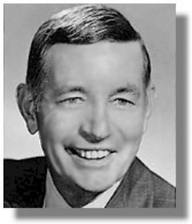
Howie Rose photo by Kevin Ryan

Wednesday, March 23, 2011

The Curse of the Flying Scot

     Sing Goddess! The wrath of Bobby Thomson!

     The Trojan War had its Homer and Iliad, the birth of Rome its Virgil and Aeneid, the Black Death its Boccaccio and Decameron, Medieval Florence its Dante and Divine Comedy, Islam's Golden Age its Scheherazade and A Thousand and One Arabian Nights, Samurai Japan its Lady Muraski and Tale of Genji, a day in 1904 Dublin its Joyce and Ulysses, the V2 Rocket its Pynchon and Gravity's Rainbow. So it should be that baseball's greatest game—nay, the all and everything and nothing, the sublime ecstatic agony that is baseball—have its Gordon McLendon and his transcendent flight of verbal fancy on the afternoon of October 3, 1951.

 
     We are, of course, talking about baseball's archetypal moment, the game of games with its end of ends, when Bobby Thomson sent Ralph Branca's fastball hanging just a little too high and not far enough inside into the Polo Grounds' lower left field deck, the New York Giants into the World Series and the hard luck Brooklyn Dodgers back to Mudville.

     The facts and legends and myths of this third and deciding playoff game that placed a no pun intended giant exclamation point at the back end of the fabled 1951 National League pennant race have been more than amply documented by any number of fine historians, writers, novelists, poets, and artists in the nearly sixty years since Thomson struck his fatal blow in the bottom of the home team ninth. Joshua Prager's monumental and endlessly revealing The Echoing Green stands on high not merely on the strength of its profound reportage (if sometimes quirky prose) which settled once and for all the dark secret that finally had to be told: the Giants stole signs. Armed with a 35 .mm Wollensak telescope shrouded in a window of the distant center field Polo Grounds clubhouse, a jerry-rigged buzzer in the right field bullpen and a simple hand signal, any Giant batter could (unbeknownst, of course, to the opposing team, umpires or fans) get a heads-up on the next pitch. And, by all accounts, Thomson was particularly liberal in accepting such inside poop starting when the Giants hatched their plot in late July and all the way on through their tremendous stretch drive when they climbed way out of a hole, winning fifty of their final sixty-two games in charging back from thirteen games off the first place pace and tying the Dodgers on the regular season's final game.


      Cheating or not, hitting Major League pitching in any era is a tall order and the Giants still had to contend with winning on the road where such surreptitious optical assistance was unavailable. And when Thomson smacked a homer to win the first game of the playoff series off Branca in Brooklyn, he was most certainly on his own.

     Baseball—it is well known—is a game of curses, superstition and ritual. "The Curse of the Bambino" was finally lifted when the Boston Red Sox ventured into the belly of the Beast and returned from a death-defying hero's journey with the broom of the Wicked Witch of the West. God knows what the Cubs did to deserve a century-plus World Series championship drought though my bets are on the fast one Johnny Evers pulled on the Giants and umps on the very same Polo Grounds turf in 1908 in the infamous "Merkle's Boner" contest. That Barry Bonds wears no World Series rings is a no-brainer and I have every suspicion that the baseball Gods were not smiling when they spied Willie Mays sipping champagne on the San Francisco bench late in the sixth game of the 2002 October Classic before the Anaheims roared from behind to take the game and then the crown on the following eve. Am I waxing a little too mystical for you? Hearing the theme music for "The Twilight Zone?" Whatever, these and other quirks of diamond fate have been pondered and parsed and divined by generations of fellow baseball mystics with no definitive answers... yet.


     As for the "Curse of the Flying Scot" consider this: the Giants never again won a World Series he could truly enjoy. When they finally did once again capture baseball's crown this past season it was just a couple of months after Thomson had died on the 62nd anniversary of Babe Ruth's death. Yeah, the Giants captured baseball's crown in 1954 but Thomson had been dealt to the Milwaukee Braves the previous off-season. Ironically, an injury that sidelined him in his first of three-plus seasons with Milwaukee gave Henry Aaron entree for a career that needs no further descriptive ink here. Thomson started the Braves championship 1957 season but he had dealt back to the Giants mid-season and never did get to dance with Gods or wear a Series ring though he was there, somewhat fittingly, when the Giants played their final game at the hallowed horse shoe of a baseball barn nestled at the foot of Coogan's Bluff at season's end.

     Along with Prager's history of the season, the game has been celebrated in fiction with the opening chapter of Don DeLillo's Underworld masterwork justly acknowledged as the class of the field though Alan Foster's underappreciated bildungsroman, Goodbye, Bobby Thomson! Goodbye, John Wayne! worth something more than an honorable mention as well. And Miracle Ball, Brian Biegel's personal odyssey in search of the lost home run ball (it has never been officially accounted for), is a recent, quite fabulous addition to the 10/3/51 canon. Oh, and guess what Sonny Corleone was listening to on the car radio right before he was slain at the toll booth in the premier Godfather film? All told, I would venture that the Thomson advent has easily produced more tomes and cultural reference than any other game.

Joshua Prager's website:

     Even those who know little about Thomson's "Shot Heard 'Round the World" have heard a recording of Russ Hodges' iconic home run call:

Bobby Thomson... up there swingin'... He's had two out of three, a single and a double, and Billy Cox is playing him right on the third-base line... One out, last of the ninth... Branca pitches... Bobby Thomson takes a strike called on the inside corner... Bobby hitting at .292... He's had a single and a double and he drove in the Giants' first run with a long fly to center... Brooklyn leads it 4-2...Hartung down the line at third not taking any chances... Lockman with not too big of a lead at second, but he'll be runnin' like the wind if Thomson hits one... Branca throws... [audible sound of bat meeting ball]

There's a long drive... it's gonna be, I believe...THE GIANTS WIN THE PENNANT!! THE GIANTS WIN THE PENNANT! THE GIANTS WIN THE PENNANT! THE GIANTS WIN THE PENNANT! Bobby Thomson hits into the lower deck of the left-field stands! The Giants win the pennant and they're goin' crazy, they're goin' crazy! HEEEY-OH!!!'' [ten-second pause for crowd noise]

I don't believe it! I don't believe it! I do not believe it! Bobby Thomson hit a line drive into the lower deck of the left-field stands and this blame place is goin' crazy! The Giants! Horace Stoneham has got a winner! The Giants won it... by a score of 5 to 4 and they're pickin' Bobby Thomson up and carryin' him off the field!

     What most don't know is that very little of Hodges' broadcast (on WMCA 570 AM) was even captured on tape and its mere existence is something of a small miracle unto itself. As the story goes, Larry Goldberg a Giant fan living on 12th Street in Park Slope, Brooklyn, set the microphone his reel-to-reel tape recorder up in front of his bedroom radio and asked his mother to keep an ear to the game and push the record button at the ninth because he was still going to be at work when the game was due to end. Within a day or so of the game, Goldberg got the tape to Hodges who then set the wheels in motion for its release on vinyl and global dissemination.


For more on the saga of the Larry Goldberg tape, click here:

    Brooklyn broadcaster Red Barber's call of the fateful blow on survives too, but whether the balance of his broadcast has stood the test of time remains, at least to me, unclear. By contrast to Hodges, the Ol' Redhead remains true to character, his call of the home run betrays some excitement yet remains as formal as his demeanor as he lets the howling crowd sing, knowing that anything he would say might diminish the moment's gravitas.

     Other legends of baseball broadcasting were on hand and at work that afternoon as well. Ernie Harwell was doing the NBC-TV chores, Al Helfer manned the mic for the Mutual Broadcasting System and the lionized team of Buck Canel and Felo Ramirez (the deans of Spanish language radio bĂ©isbol) called the game for all Latin America. Sadly, not a scrap of any of these survives if recorded at all but what a find if a kinescope of the television feed were to surface much like the recent unearthing of the 1960 World Series seventh game!


     I sincerely doubt, however, that any of these great voices of the game could match the kaledeidiscopic verbosity of Gordon McLendon and his word painting tour de force on that particular day. For not only has a full game recording survived, it stands as perhaps the pinnacle of the genre for all its qualities as artistry, entertainment and prophecy.

     While the whole game no longer appears available on www.archive.org for free streaming or download, his Thomson home run call and those of Hodges and Barber can be found by clicking here (or by a reasonably priced purchase through mlb.com):

     McLendon (coincidentally nicknamed "Old Scotchman") was one of the more intriguing figured in the early history of electronic media, the extant recording of the Thomson game a testament to the medium's possibility as a high art form. McLendon did not merely hold forth behind the mic for the Liberty Broadcasting System, he literally owned it. Even before he founded Liberty, the then-thirty-year-old entrepreneur had already lived a whole lotta life and would go on to live a whole lot more. A Yalie who had served as editor of the college's esteemed literary magazine and member of Skull & Bones, WWII veteran and intelligence officer, McLendon later made tens of millions in Texas oil,  buddied with the likes of Clint Murchison, J. Edgar Hoover and Richard Nixon, and even factored into the JFK assassination as a minor player in Jack Ruby's circle. And we haven't even touched on his stint at Harvard Law School or career as a radio pirateer, author, film producer, Top 40 maverick, and Ho'wood PR guy. Somewhat predictably, the conservative democrat did, at one point, make a couple of unsuccessful stabs at elected office but parted ways with the party and electoral politics so it somehow figures that he would be in the thick of things at the Polo Grounds on October 3, 1951 the same day that another shot heard 'round the world—the Russians' testing of a nuke—was announced.

Gordon McLendon's Wikipedia entry:

And a link to Ronald Garay's biography of the man:

     Prior to the Thomson game and as a broadcaster and network chief, McLendon's claim to play-by-play fame was, like so many of his era, as a recreator of games, embellishing on Western Union feeds and enhanced by studio sound effects (bat striking ball, crowd noise, etc.) all produced in reportedly very convincing fashion on Liberty's short-lived "Game of the Day."


     But McLendon was in the Polo Grounds broadcast booth as Sal Maglie hurled the first pitch of third 1951 playoff game, poised to deliver his masterwork. His winning voice—a mellifluous, resonant baritone—combined with a seemingly innate and intuitive ability to deliver his coverage in elongated, alliterative allusion-rife paragraphs consistently challenge the audience not merely to listen but to think. While never exactly betraying the intellectual 'tood he may have thought his his Ivy League sheepskin bestowed upon him, McLendon manages to straddle both the rarified airs of the Ivory Tower and the Newtown Creek coming off as at once a man of the academy and the people. And this cat never—and I mean never—quits yakking, unleashing his spiel for nine taut innings of solo flight that would make any long form improviser (John Coltrane, Ravi Shankar, Lord Buckley, Kerouac, Ginsberg, Jerry Garcia, included) proud, indeed. Lenny Bruce, it is said, dug cracking up the band and, at times, it even sounds like McLendon is blowing his own mind merely to get a rise out of his engineer and producer if not just himself. Yet he never loses focus of the game, clearly seeing its shifting shades and capturing the ever-mounting drama pitch-by-ulcer-inducing-pitch.


     One of these days some truly pathetic obsessive baseball noodnik will transcribe the recording of McLendon's entire broadcast and create a zippy website with sort of whistles and bells. Until then, try a sampling of these McLendon mind breaths on for size to get an idea of his Homeric handle on the epic afternoon.


     During his pregame set up, McLendon sounds fairly grounded: "...and after a hundred and fifty-four regular season games and an additional two playoff contests, the Giants from Harlem and the Bums from Brooklyn have come down to the wire where it is all or nothing."

     But we soon get a hint that his cinematic and prophetic sense of things are beginning to merge: "A demented Hollywood scriptwriter in the throes of delirium tremens would not have dared pen anything so completely fantastic as this dizziest of pennant races... fifty years from now fans will be talking about this afternoon’s hero as yet unknown... but the man and the hour are about to meet."


     And, as an observer of pennant fever, he reveals himself to be accurate diagnostician: "This is it, boys and girls. And it’s about time because a few more days of nerve-shattering suspense that has the town in a frenzy would fill all the hospitals, booby-hatches and hoosecows and provoke a civil war."

     An example of his crisp play calling is evidenced on the game's first pitch when he intones: "raked outside—ball one and this climactic game of the 1951 season is on the fire!"

     Those intimate with the events of the game know that, before he was a hero, Thomson committed an egregious base running blunder, never looking up after lashing a hit to left and getting himself thrown out at second in the second inning. Knowing well the history of both franchise's goof-up in days of yore, McLendon takes center stage: "Well, the New York Giants, pulling a skull in the second inning—a real boneyard play—memories are brought to mind of the ol’ daffy Bums whose shades still grow green in the Limbo of Brooklyn... that one hasn’t been seen since the Snodgrass Muff or Merkle’s Boner in years gone by!"

     Much of the joy of the recording is derived from McLendon's off-the-cuff riffs such as this nugget describing a city obsessed with a baseball game: "From Flatbush Avenue to Sheepshead Bay, from the Savoy Ballroom to the YMCA, from Jacob Riis Beach to Hamburger Heaven,   this series has got the joint jumpin’... eight million New Yorkers are really moving today..."


     At times his mythic waxings reach a whole new strata of lyricism: "Here at the ancient cricket crease below the bluff next to the black waters of the Harlem River... churning like the River Styx to the great Atlantic Ocean."

     And how about this for alliterative, pre-rap when he describes the game as "a double-dodge deep dish doozer in the Polo Grounds."

     Thomson again factored into the game's box score when he drove in the Giants first run in the bottom of the seventh and McLendon deftly mixed his shtick with spot-on reportage: "... and Bobby Thomson up at bat—just as dangerous as a Great Dane behind a meat counter... Bobby calls time and steps out of the batter’s box... Thomson, born in Glasgow... boy, over on the Gowanus, the lilies must be drooping... bodies must be floating down the canal like water... the infield is in to play for a play at the plate... they want to cut off that tying run... the black shadow of calamity hanging over the Brooklyn Dodgers... and, like the great Phoenix, the never-say-die Giants rise from the ashes yet once again!"

    And when Maglie struggles late in the game, McLendon unleashes an amazing tribute to the hard knocks of life and baseball that to somehow recall images of the wily Odysseus strapped to the mast of his boat as the Sirens call: "Maglie was the logical choice for the big one of the big ones. An old hand at thirty-five years, he’s pitched under the most difficult possible circumstances. Banned from baseball for jumping to the Mexican League, Sal Maglie worked in Drummondville, he worked in Tampico, he pitched in heat, in drizzle, in driving rain, broiling sun, riding buses, riding mules, riding everything... he’s one of the toughest pitchers in the game and certainly one of the most taciturn..."

     No, McLendon's call of the game's climax doesn't hold a candle to Russ Hodges' out-of-body experience, but it nonetheless captures all that the moment could be: "Bobby swings, there's a long one out there out to left! Going, going, GONE and the Giants win the pennant!"

     It's probably a little clichĂ© but of all the words written about this great game,  sportswriter Red Smith's words introducing his New York Herald Tribune article still ring through the decades: "Now it is done. Now the story ends. And there is no way to tell it. The art of fiction is dead. Reality has strangled invention. Only the utterly impossible, the inexpressibly fantastic, can ever be plausible again."


     Yes, it all fades into a sepia mist. But take a walk across the Macombs Dam bridge from Yankee Stadium and across the Harlem River to where Thomson's shot landed. Poke around Edgecombe Avenue and you will spy an old concrete staircase leading to the foot of where an old ballpark once stood. Look a little closer and notice some words laid in metal, lingering vestige of a lost time: "The John T. Brush Stairway Presented By the New York Giants."

     This is a secret thing. A talisman of the soul to be passed under the table through the ages to fellow believers. Old civilizations will fall to the sword. The monuments of their legacy will vanish but the glory of their times will live on. Penn Station, Schrafft’s, the Biltmore Clock, Nedicks, Birdland, the Third Avenue El, the Friday Night Fights, Sunday doubleheaders, a nickel ride on the Staten Island Ferry, a decent egg cream... kiss ‘em good night. Same goes for the Polo Grounds—that hollowed, hallowed ground, that rusted horseshoe, that green cathedral wedged beneath craggy Coogan’s Bluff.

     Men will laugh and children will shout. Mudville is Mudville where the Mighty Casey pouts. And miracles can still cause seas to part. But this game called baseball is designed to break your heart.

    For the Box Score the October 3, 1951 Giant-Dodger playoff game, click here:
or here:

Wednesday, March 9, 2011

Of Red Birds, Red Scares, A Couple of Paisans, Evil Empires & Yankees Going Home


     My folks were never big baseball fans. In fact, they were never even little baseball fans. A night at the opera, a MOMA sojourn or a martini lunch at La Fonda del Sol were more their speed. Anything other than being subjected to the riff-raff inhabiting haunts like Yankee Stadium, Shea Stadium or the Polo Grounds. Yes, their noses were defiantly pointed upwards, making sure to take in air somewhat more rarified than that enjoyed by the rest of the human race.


    To be fair, they took me to the odd game and allowed me to obsess over my growing baseball card collection, all the while shaking their heads as my shrine to "The Mick" took form on my bedroom bulletin board like some kind of neo-Tibetan sand mandala. But when it came to whiling away my dwindling youth watching baseball games in front of our increasingly temperamental black-and-white Sylvania... uh-uh. That, my fellow diamond mystics, was barely—and I mean barely—negotiable.

     I think the deal went down something like this: if I watched an hour of channel 13 (that's PBS for all you non-New Yorkers) for an hour a day and/or no other television for a week, I was permitted to watch one game on the tube over the weekend. Mr. Rogers, here I come! Generally, this payback occurred on a Friday night as I was able to extend my bedtime and because I was often otherwise occupied on the weekends at least during game time. I do recall figuring out that if I picked a Sunday as the designated "game" of choice, I was able to seriously game the system as those were the days when Sunday almost always meant doubleheader and the 'rents seemed to remain forever clueless as to the extent of my very long PM baseball revel.

     Another silver lining of the imposed Draconian statutes was that they chased me under the bedcovers to commune with my little RCA transistor radio where the voices Phil Rizzuto, Lindsey Nelson, Bob Murphy and all the city's baseball radio guys of the era (and occasionally Tommy James and the Shondells' "I Think We're Alone Now") danced like summer sugar plums in my head while Morpheus did a slo-mo soft shoe on my eyelids.


     The house rules also extended—rather cruelly I might add—to the World Series through 1964 even though my beloved Yankees were in a tussle for baseball's crown that brilliant autumn. My memory of much of that series is—admittedly but understandably—a little vague. Game 3 was played on a Saturday afternoon and I must have seen at least part of the game as I can still capture Mantle's bottom of the ninth walk-off blast off Barney Schultz majestically sailing deep into the right field caverns of the big ballpark in the Bronx. Though, who knows, maybe that's a memory merely captured from multiple viewings of the film highlights over the ensuing years. I do know that I memorialized the hallowed HR by drawing this pencil rendering off of the following season's batch of Topps baseball cards.

 
     And I remember catching radio snatches of the '64 Series and most especially its seventh game between breathers as I romped with my candy-assed, Upper East Side private school krewe in Central Park that crisp weekday afternoon. Some old guy (he was probably like 50) was sitting on a park bench listening to the game as we checked in with him, finally gathering in a solemn circle as the Series tilted to St. Lou and season slipped away like so many of the fiery autumn leaves blowing across the park's Great Lawn.

For a link to a recording of Game Seven of the 1964 World Series, click here (selection #13):

     Boy, did that sting and would have stung worse if we knew then what we know: that the balance of our youth and fleeting adolescence would be comprised of an era of Yankee mediocrity. Twelve years would pass before the Bombers ever made it to another World Series plus a lucky thirteenth until they danced again in baseball Shangri-la. We're talking a lot of Horace Clarke here, dig?

     Revisiting the broadcast of the seventh game of the '64 Series all these many moons down the pike, I am quite impressed with the artifact on several counts. The game itself turns out to be a pretty good one: the Yanks never say die and, despite being in the hole 6-0 by mid-game, make a proud, if fruitless, run at victory. And, even more pleasantly, our word painters du jour— Monsignors Rizzuto and Joe Garagiola—leave a veritable masterwork hanging on the plaster of this cyber Louvre.


For links to video from the 1964 World Series, click here:


     Even after a little bit of research, I'm a little fuzzy on some of the broadcast particulars here. Rizzuto was in 1964, of course, part of the regular Yankee team of radio and television voices. Garagiola was as best as I can figure emerging as a national voice of some stature who would join the Yankee trio of broadcasters the following season replacing the famed Mel Allen. Maybe there was a home feed on the Yanks then-as-now WCBS flagship station that did not include the Scooter but I'm guessing that he was paired with Garagiola for the Series on this network 'cast and that was that. After three seasons with the Yanks, Joe G. would snare a very cherry longtime gig as one of NBC's Saturday afternoon Game of the Week go-to guys paired with Curt Gowdy which, for me anyway, was an interminably long stretch of pretty ho-hum chatter.

Joe Garagiola Wikipedia entry:

     At a remove of some decades, my impressions of Garagiola as a TV baseball announcer, Mad Ave. pitchman, Today Show personality, Tonight show guest, and Gerald Ford booster are still not particularly pleasant ones. Always trying a little (or even a lot) to hard to be funny, he rarely was. And as far as any insight or baseball lowdown might be concerned, forget about it. Though sometimes spot-on, his rap too often and too quickly devolved into mindless drivel. I remember he wrote a book with the memorable title Baseball is a Funny Game that I read on the back of a Greyhound bus en route to summer camp in '66 and thought it was pretty stupid even at age nine, so that he would make a career or verbal inanity is not a particular surprise. An omnipresent Saturday irritant whose banal shtick overwhelmed any of the glib, beat reporter behind the mic skillz he exhibited earlier in his broadcasting career and which are in top shelf form here.


     Like Rizzuto, Garagiola must have made a pact with some demon, The Devil and Daniel Webster-style. Like Stephen Vincent Benet's most memorable creation, both the Scooter and Garagiola seem to have changed before our very eyes and ears—and not for the better—transforming from really on the ball illustrators of the great game into lukewarm, half-baked concoctions that stay in the back of the fridge for years. But way back when and on this 1964 World Series seventh game recording, we are treated to two consummate pros as at the top of their game as they'd ever be.

     I'm assuming one reason NBC paired the two had something to do with their shared histories on the opposing league champs: the Scooter as a star shortstop for the Yanks and Garagiola as perennial, second string catcher hanger-on for the Cards in the late 1940s and early 1950s. Not only that, but the two were born and raised in the very towns where they made their pro baseball mark—Rizzuto from in Brooklyn and Garagiola born and raised in the same Italian-American St. Louis neighborhood that produced Yogi Berra, a friend to both men who that very day was about to manage his last game as a Yankee for quite a number of years. And while one can well imagine that Phil was pulling for the Boyz in Pinstripes and Joe G. for the Cards, nary a hint of allegiance is ever exhibited. And, even though as I mentioned Garagiola wouldn't become a full-time Yankee voice until the following spring, it already feels as though the two had been working together for at least a few spins of the Earth on its axis.


     If I've been a bit of my usual vague or too coy self, allow me to be real clear here: this is one of the best extant broadcasts yet reviewed on Painting the Word Picture. And part of the strength lies in the shared banter between two paisans. This was around the time when the radio booth began to be shared by a couple of cats who, instead of merely trading play-by-play duties with each broadcaster essentially flying solo for 4.5 innings, would partake in a genial repartee and a genuine bull session was allowed to flourish.

     The duo are all over this game. Each and every pitch, fielding alignment, bounce off the faraway centerfield wall, high chopper, Texas Leaguer, pickoff move and attempt, mound visit, style of home plate umpiring, and mustard squirt are observed and described with just the right amount of detail.

     The game itself is a keeper, developing from taut pitchers' duel to blowout to fraught nail-biter that more or less adheres to my not-so-strict definition of what at least comprises a good contest: a tying run left on deck when the final out is recorded. And the Cards do it in a style that has more or less marked their narrative arc as a franchise, with speed, guile, solid pitching, flashy leather, and just the right amount of power when most needed. While not quite the Gashouse Gang of the 1930s or those hive-inducing 1980s Ozzie Smith/Terry Pendleton squads, this '64 edition of the Cardinals featured two of the more nervous-making speedsters: Curt Flood and the legendary Lou Brock.


     Starting hurlers, rookie Mel Stottlemyre for the Yanks and St. Loo's Bob Gibson, match each other early on, pitching in and out of trouble before the Cards break through for a pair of three-run frames in the fourth and fifth with what would ultimately prove to be an insurmountable lead on the strength of timely hitting, a double steal in which Tim McCarver scored from second base, a Brock solo shot, and sloppy Yankee fielding. Mantle got the Bombers back into the game with a three-run homer, a long shot to left-center for his 18th and final World Series dinger—a record that has stood and might well stand the test of time. Yankee second baseman Bobby Richardson always seemed to be a clutch and consistently productive World Series performer and his record-setting 13th hit in a seven game series is duly noted an celebrated in the course of affairs. But Gibson, pitching on but two days rest, hangs tough and though he tires down the stretch, he rewards manager Johnny Keane's faith by going the distance inducing Richardson to pop up to second baseman Dal Maxvill for the season's final out.

     A key play in the game occurs in the Yanke's top fifth when right fielder Mike Shannon robs Phil Linz of a hit with a diving snare, jumps to his feet and doubles Tom Tresh off second for a rally-killing DP that might well have steered the course of events quite differently. Shannon, it must be noted, is one of at least five players from both rosters who would go on to establish longstanding and respected second careers as broadcasters: Tony Kubek, Bob Uecker, Bill White, and Tim McCarver.


     Something else that struck me as I listened to the recording was the generally muted Sportsman's Park throng. Considering this is the deciding game of World Series, the first series appearance by the Cardinals in eighteen seasons, and the culminating moment of a season that saw the Cardinals snatch the NL crown in rather miraculous fashion (aided, of course, by the Phil's fatal final week swoon), the sellout crowd of 30,346 rarely budge the decibel meter much above its mid-range. Without prior knowledge or reminder of the game's import, this could be just about any lazy mid-summer afternoon confab. They get loud as the hometown team piles on the runs and notches the big out. And it's fun to hear them get on Joe Pepitone's butt the day after the Yankee first bagger parked a late inning, game-breaking grand salami onto the yard's right field pavilion roof. But the crowd's relatively subdued nature owes more I think to a more genteel era when there was still a dearth of—despite what Dylan was scribbling at the time—"Advertising signs they con/You into thinking you’re the one/That can do what’s never been done/That can win what’s never been won/Meantime life outside goes on/All around you." In other words, a time of reduced hype and bombast.


     Baseball (and popular culture in general) so often feels as if it exists in its own little bubble, untouched by the divine tragic comedy of "real life." When it is impacted—with a steroid scandal, say, or, more consequentially, a 9/11—it tends to be a fleeting happenstance. But peppering this recording and puncturing the make believe bubble we so often insist on enclosing ourselves, is the breaking news from Moscow that Soviet leader Nikita Khrushchev was being pulled from the Kremlin mound in favor of a long man with a rubber arm: Leonid K. Brezhnev. I dimly recall this turn of international events though not in relation to the '64 Series. My parents, I remember, were concerned, discussing the matter in rather alarmed tones, this less than a year following the JFK hit and other matters of anxiety-provoking global concern. That my mother's parents both recorded their final at-bats around this time might also color my memory of this tumultuous patch of early life.


     Rizzuto and Garagiola predictably make no mention of the big Red power shift but the recurring newsroom updates underscore the imminent demise of another baseball season, the onset of colder weather and the threat of a hard rain.


For Box Score of 1964 Seventh Game Click Here:
http://www.baseball-almanac.com/box-scores/boxscore.php?boxid=196410150SLN

Sunday, February 20, 2011

Vanilla On Vanilla (or like white on sox)


     Pity the poor Chisox fan. Between the curse of the Black Sox that produced long strings of woulda, coulda, shoulda been a contender clubs filled with some legit talent and more than a few characters, some crappy uniforms (the red scheme, the disco model and—ugh—the shorts), the destruction of the grimy palace that was Comiskey Park and all for but one world championship banner to wave in a Windy City winter to show for it... well, my hat's off for hanging so tough.


     I'm afraid to say, dear readers, it gets worse—way worse. For providing the AM soundtrack to more than forty years of White Sox and Cubs baseball was perhaps the lamest excuse for a play-by-play man I've yet to come across on this batch from the archive.

For a link to the September 2, 1967 White Sox @ Red Sox game click here (#14):

     Now perhaps I'm being too harsh. By the time Bob Elson parked his carcass behind the mic atop Fenway Park on a blustery Saturday a couple days shy of Labor Day, the then-sixty-three-year old had been on more or less the same gig since the summer prior to Wall Street laying another f'n goose egg.


     Maybe the guy was getting a little burned out, maybe he'd been disappointed by the White Sox a few too many times fumbling and bumbling a pennant race down the stretch, maybe he'd downed one too many the night before this day game (it is said Elson enjoyed hoisting a few with the players), or maybe he was just way too old and/or old school to pack much of a verbal punch in the Summer of Love's waning hours.

Bob Elson Bio:

     Though a veteran of the era when broadcasters would recreate road games by reading and seriously embellishing the feeds off a Western Union telegraph (see, kids, before email, a quick way of transmitting info long distance was... ah, forget it), Elson shows none of the talent that some of his peers in the field with similar experience had. Guys like Gordon McClendon had a lot of fun using the language and riffing whether they were reading off a ticker tape or actually witnessing the action. Yeah, I am well aware Elson is a semi-revered figure in the radio baseball Elysium, enshrined in Cooperstown as a Ford C. Frick Award annually presented to a distinguished broadcaster of note. And because he is said to have inspired and influenced a slew of latter generation word painters like Jack Brickhouse and Milo Hamilton, who am I to dis Mr. Elson on the strength or weakness of but one extant recording? But, caveat emptor, this one example is deadly.


     Double deadly: Elson's partner, the somewhat junior Red Rush, is only incrementally better here. With their big rounded vowels, shared allergies to mentioning what kind of pitch is thrown (not sure the words "curve," "slider" or "change-up" are ever even uttered), and mutual obsession with both the weather and out-of-town scoreboard, this very much like-sounding pair are the very definition of vanilla. When a broadcaster does a better job at selling a bottle of suds than describing a centerfielder's loping route to snare a drive off the Green Monster, nine miles of rocky road lie ahead. Bird and Diz, Gleason and Carney, yin and yang these fellows definitely are not. Think Pat Boone and Dick Clark.

Red Rush Bio:

     In some ways they are the very embodiment or reflection of so many of those interchangeable white guys on the White Sox from the era: Ron Hansen, Ken Berry, Pete Ward, Gary Peters, Ed Herrmann, J.C. Martin, Joel Horlen, Tommy John, Al Weiss... well, you get the idea.


     Truth be told, the game itself was not the greatest one ever played on Earth either even though it did come in the froth of the last great true pennant race before the leagues were sliced and diced, before the ALCS or NLDS, before wild cards and, like Dylan would sing long after Blonde On Blonde: "greed got in the way."

     Still, for anyone with a soft place in their heart for the 1967 "Impossible Dream" Boston Red Sox, this recording is a must despite the outcome.

For Red Sox 1967 videos:

     With but a month remaining in the regular season, a few mere crooked numbers in the loss column separated five teams: the Red Sox, Twins, White Sox, Tigers, and Angels were all in the proverbial thick of it. One would like to think that an announcer might bring some urgency and drama to the fore when it counted—even in a sloppily played game—but not here. 1967 was the first of four years in which Elson and Rush were paired and, to these ears anyway, it was four years too long.

     Despite the two smiley faces imparting the action, there is much to savor from the game which was essentially decided in the top of the first when Boston ace Jim Lonborg bringing his impressive 18-6 record to the hill coughed up three runs after handily retiring the first two South Siders to visit the plate.


     A pitchers' duel of sorts unfolds over the course of the following frames with Chicago's Horlen (a force to be reckoned with in his career year of '67—he threw a no-no a mere eight days later en route to a 19-7, 2.06 ERA) shutting down the Bosox when it counted. Yaz, George Scott, Rico Petrocelli, Reggie Smith—all Boston's heroes are in the house and, along with Chi's Rocky Colavito, Tommie Agee, Don Buford, Jerry Adair, and Walt "No Neck" Williams, it warms the heart to hear these names spoken once again.

     Williams is easily the focus of the game's more interesting moments as not only does he make every ball hit to him in left an adventure, he gets thrown out at third not once but twice!

     Chicago's 4-1 win that afternoon had a momentary impact on the league's standings by sundown, knocking Boston from its precarious 1/2 game perch atop the AL when coupled with the Twins easy five-zip victory over the Tigers. There was still a month of thrills and chills and very high drama yet to come with the final standings not decided until Lonborg coaxed Minnesota's Rick Rollins to swing at off-speed pitch sending a meek pop-up into the glove of Petrocelli on the season's final pitch.


     A curio of note: early in the game, Elson mentions that White Sox games are being carried on a new affiliate, WCJU in Columbia, Mississippi. I wonder if that might be due to migrations of African-Americans up and down Highway 61. From the 1940s on, the White Sox were favored by Chicago's African-American community many of whom who lived in the same South Side neighborhood in which this home team played. Perhaps by 1967, many of them were heading back points south after two decades of working the Gary, Indiana, steel plants and some smart local radio exec thought WCJU might be able to cash in on the allegiance of the returning masses to the team they had long pulled for.

     A final, semi-tangential anecdote related to Chicago's second baseman that day, Don Buford: returning home from a business trip out west, I was killing time in the San Francisco airport when a pay phone I was standing next to went ding-a-ling. For some reason, I decided to pick it up. "Hello?" I asked. "Is Don Buford there," said the voice on the other end. "Don Buford the baseball player?" I asked. "Yeah," said the voice. I looked up and immediately saw that year's excuse for the San Francisco Giants waiting to pick up their bags after returning from a road trip. And, standing in the middle of a tired looking bunch was Don Buford. More amazingly, standing next to him was one of my all-time favorite players and personalities, Frank Robinson who was in the midst of managing the squad to yet another not even so-so year. "I see him, hold on a second," I told the mystery voice.

     I walked up to Buford and, pointing at the phone, said "There's a call for you over there at that phone."

     Exit Buford leaving what seemed like just me and Frank Robinson as the only two people left after a long nuclear winter. Unable to resist, I began telling Robinson how—even though I rooted for New York teams—I just loved watching him, how he soared in the '66 World Series, how he robbed Bobby Murcer of a game winning three-run homer by diving into the right field wall in Yankee Stadium, how he...
Rambling, I could see Robinson's tired, jaded, jet-lagged face grow ever-more impatient with yet another celebrant extolling his exploits. And then I remembered his legendary, reported surliness prompting me to cut the Pindarian rant and merely say, "Well, thanks."

For link to the 9/2/67 White Sox @ Red Sox box score click here:
http://www.baseball-almanac.com/box-scores/boxscore.php?boxid=196709020BOS

Monday, February 7, 2011

Sweet By & By

     1959. The military-industrial complex was just getting its feet wet. Lady Day and Prez had flipped the mortal coil. Castro was making his big push down on that baseball-loving island. Hawaii became the union's 50th state. The Dalai Lama split Tibet. The "Twilight Zone" made its TV premier. The music died on an icy February morn in Clear Lake, Iowa. Yeah, a whole lotta shakin' was goin' on.

     And on Chicago's South Side not too far from Chess Records and all those storied blues clubs and jook joints where the likes of Muddy Waters, Howlin' Wolf and Little Walter were emerging as the genre's grand poo-bahs, the go-go White Sox rose to a rare pinnacle by snatching the American League pennant and a chance to meet the L.A. Dodgers in the October Classic. In that long post-war, baby Boomer and beyond stretch from 1949 through 1964, this was the only season that did not feature a team HQ'd in the Big Apple.


A link to games one and five of the 1959 World Series can be found here (selections #10 & 11):

     It occurs to me that the '59 Dodgers and GOP had about as much in common as that year's edition of the Chisox had with the Dems. Think about it: left coasters like Nixon and Reagan were on the verge of replacing the east coast moderate elite as the party's go-to guys mirroring L.A.'s usurp of Brooklyn's beloved "Bums." The transitional phase could also been seen in the Dodgers' personnel as the old guard of Snider, Hodges, Furillo, and Labine were being replaced by clean, well-scrubbed young faces named Koufax, Drysdale, Fairley, Roseboro, and Wills who would define the franchise's relative NL dominance in the coming years and plant the seeds for likes of—ugh—Steve Garvey.

     By contrast, the White Sox were a scrappy, blue-collar enterprise, a no stick/flashy leather one year blip on the American League screen that somehow evokes the city's storied broad shoulders and edgy political stew. Yeah, the well-oiled machine of Mayor Richard J. Dailey was in full force and the team's gallery of multi-ethnic rank-and-file talent, guys with names like Fox, Wynn, Minoso, Aparichio, and Kluzewski who could just as plausibly walked off the floor of a Gary, Indiana, steel plant as out the front steps of the Comiskey Park dugout.

Links to 1959 World Series video clips:

Links to More 1959 World Series Vid:

And for all you Minnie Minoso freaks:

     If I could spin another half-baked corollary that would extend to the broadcast booths of both Comiskey and the L.A. Coliseum I would but I can't so I won't. I will, however, offer that one of the joys of spending some time with these increasingly ancient recordings from the Archive are the forgotten and some even unknown (at least to me) chapters of baseball history lore that can still raise a brow of a know-it-all baseball bore such as myself. Who knew, for example, that the Dodgers bested Milwaukee's Braves in two tight playoff games to secure that season's senior circuit crown? Or that Carl Furillo was such a clutch and productive gamer—30 career World Series hits?!?!

     As the World Series voice of ubiquity during the late 1940s through the early 1960s, Mel Allen you may have fathomed is again featured here joined by By Saam, a Texas native and broadcasting workaholic whose multi-sport career found him at the mic for any number of notable games and one who crossed paths with everybody from characters as diverse as the courtly Connie Mack to the very face of big league baseball rebellion: Dick "Don't Call Me Richie" Allen. As one who commenced broadcasting Philadelphia A's home games in 1939 and the same for the Phillies a year later, Saam was not merely the voice of Philly baseball but the voice of sports in the City of Brotherly Love. Be it football for Villanova, Temple, the Eagles;  basketball for the Warriors before their move to the Bay Area; or even ice hockey for Eastern League's Ramblers, Saam earned his moniker—"The Man of a Zillion Words­­"—the good old-fashioned way, that is to say, the hard way. Along the way, he called thirteen no-hitters including Jim Bunning's 1964 Father's Day perfecto against the Mets at Shea and Wilt Chamberlain's 100 point advent at Hershey, Pa., against the Knicks.


By Saam Biographical and Tribute Links:

      But, let's face it, the Philadelphia teams of Saam's era were nearly always also-rans left on the scrap heap of every pennant race and division race in every sport you can name, the exceptions being of the 1950 Phillies' "Whiz Kids," the '60 Eagles and a couple of very early Warrior squads. With all that hometown bitterness fomenting, no wonder the city fathers saw fit to build a jail under Veterans Stadium to house the unruly prols after one too many.

    For all their until recent dysfunction as a baseball powerhouse, Philadelphia can boast a remarkable legacy in baseball broadcasting continuity and longevity. Saam was paired with Richie Ashburn and then Harry Kalas (who died in the broadcast booth before a game in 2007) before retiring in 1975, a direct seventy-year line between the two Great Depressions (and through a whole lot more black jazz) can be easily drawn. Is there another city that can claim such an unblemished lineage?


     Because Philadelphia is within easy range of New York City, I have over the years occasionally tuned in Philly games (its sometimes scratchy signal wavering in and out of listenability) and am no stranger any of the team's radio voices over the last four decades. While I vaguely recall hearing Saam, I was generally well versed in the banter of the superior if partisan Ashburn and Kalas.

     So it was with a certain experience I jumped into the deep end with these two 1959 World Series By Saam/Mel Allen 'casts and came away generally enthused by talents of both men and thrilled to being audioported to times and spaces long long ago and far far away. With his deep voice and sing-songy intonation, I can hear why Saam enjoyed the longevity and medium national exposure he did. A little stiff by early Third Millennial standards to be sure and a bit more of strikes and ball guy with a tad too much dead air between pitches and not enough sharing with us with, say, how far a lead Wills is taking off first than I would have expected for someone elevated to call a World Series or (as  in Saam's case) two, but a solid painter of the baseball words nonetheless.


     In Game One he is at his best in the home third when the Sox sent Dodger starter Roger Craig to an early shower in erupting for a dizzying seven runs marked by a veritable merry-go-round of base hits, base runners and the first of two Ted Kluzewski homers. The Sox rally is like a bucking bronco let out of its slot and running rampant on the downtown Commodities Exchange and with Saam hangin' for dear life like some rodeo buckaroo. He also seems to take particular delight in describing Early Wynn, Chicago's Hall of Fame master of every pitch except the fast one unless it was thrown high and inside, whose mix of hurls and deliveries flummoxed the Dodgers in the series' opening salvo won by Wynn and the South Side boys eleven-zip. Mel Allen is really great as well even when mispronouncing Koufax as "Koo-fax."

     White Sox die-hards must have been licking their lips at the prospect of undoing the curse of the 1919 Black Sox scandal. It had been forty years since those dark days when Shoeless Joe scampered the Comiskey's Elysian Fields of Comiskey but the taste of victory was short lived as the Dodgers came back to win the next three games. Those same die-hards (those lucky enough to still left to wander the topside of the Earth's crust anyway) can take a little solace as the Sox Game 5 win in L.A. has also been preserved for the ages.

A link to some Charles Comiskey stuff:

     And what a game it was, a rather long 1-0 affair marked by some grand early Koufax (who struck out six in a seven inning outing) and the forgotten Bob Shaw (who scattered nine hits in his 7.1 innings under the southern California sun) in a combined three-pitcher Sox effort to get the Series back to Chi Town for what turned out to be the Series finale. Koufax is on fire in the early innings and By Saam is rightly enthused when Sandy retires the White Sox in the first on but seven pitches while striking out two on the minimum three throws each. And Sandy was, don't forget, still a couple of seasons from really even beginning to making his meteoric mark. For what it's worth, when Allen points out that former Dodger pitcher Carl "Oisk" Erskine, the man whose record fourteen strikeouts in a single World Series game would be eclipsed by Koufax would best in '63, is sitting in the owners' box with Walter O'Malley, a strange sense of prophetic deja vu all over again can most definitely be enjoyed.


     These games are particularly well-recorded. Both the crack of the bat and the roar of the crowd can be heard and the immediacy of the unfolding action almost tasted. And that both ballparks are featured is something of an added feature. Though I am a big Comiskey Park fan (even making a pilgrimage late in its last season to savor its emerald and turquoise symmetrically gritty fruits), the rare opportunity to hear a game played at the L.A. Coliseum is a treat indeed. What with its embarrassingly short left field with that dopey screen over which Wally Moon sent many of his lunar shots or its Mojave Desert-sized foul territory, to hear all these factors with the mind's ear somehow makes reality of the facility as a baseball venue. And that this broadcast preserves a game witnessed by 92,706 paying customers in a record which will probably stand until the Coliseums in both L.A. and Rome are visited by spacelings wondering how we blew it so bad, stands as a final curiosity.

     All World Series heroics and White Sox glory aside, these games should sing to the hearts of Philly Phanatics whether dressed in ersatz ornithological garb or not and those who kept kosher with By Saam, Whitey Ashburn and Harry Kalas. Back in October of '08 when the Phils were surging to but their second MLB title and the planet's highest profile White Sox booster was making his run for the presidency, I was doing some canvassing in North Philly for that self-proclaimed "Chicago kid" not far from where the ghosts of Shibe Park and the Baker Bowl—the home fields of Phillies and A's teams past—once stood. These were sad, dilapidated neighborhoods ever so slowly emerging from the poverty and neglect that has marked them since the major league last pitch was thrown some forty years ago. And while I was never completely sold on all that year's flavor of "hopey changey stuff" in the first place, I saw spirit in the eyes of those who still called the place home.